
Give a months-long brand engagement one clear home
Branding work moves in phases over months, not weeks, with multiple stakeholders weighing in along the way. Sarion keeps status, feedback, and milestone billing tied to each engagement so nothing gets lost between strategy and final delivery.
Where branding agencies lose time and trust
Long engagements lose visibility over time
A rebrand that runs four to six months moves through quiet stretches of internal work, and by month three the client isn't sure what's actually happening or when they'll hear from you next.
Strategy and creative live in disconnected places
The brand strategy doc is in one file, the creative deck is in another, and client comments on each are scattered across email — so nobody has a single view of the engagement's full history.
Multiple stakeholders need different levels of visibility
The CMO wants a high-level view, the brand manager wants the details, and the founder only wants to see final concepts — but everyone's getting the same email update whether they want it or not.
Milestone billing is tracked by memory
A big-ticket engagement is billed in stages tied to deliverables, but tracking which milestone has been hit and which invoice is due next is handled by someone mentally checking a contract PDF.
What's actually missing
A spreadsheet can list milestones, but it doesn't give clients any visibility, and it won't tell you a milestone invoice is overdue until someone remembers to check it.
Good for internal task lists, but they weren't built to give a client-facing view of a months-long engagement or to tie billing to the milestones stakeholders actually care about.
Strategy docs, decks, and feedback pile up across scattered emails and shared folders, so there's no single record of how the engagement has actually progressed over its lifetime.
Problem, met with a real fix
Long engagements lose visibility over time
The engagement's project status is kept current in Sarion throughout its run, so the client can check in on real progress at any point instead of waiting on a status email.
Strategy and creative live in disconnected places
Notes, updates, and client comments are logged against the same client project as it moves through phases, building one running record instead of scattered files and threads.
Multiple stakeholders need different levels of visibility
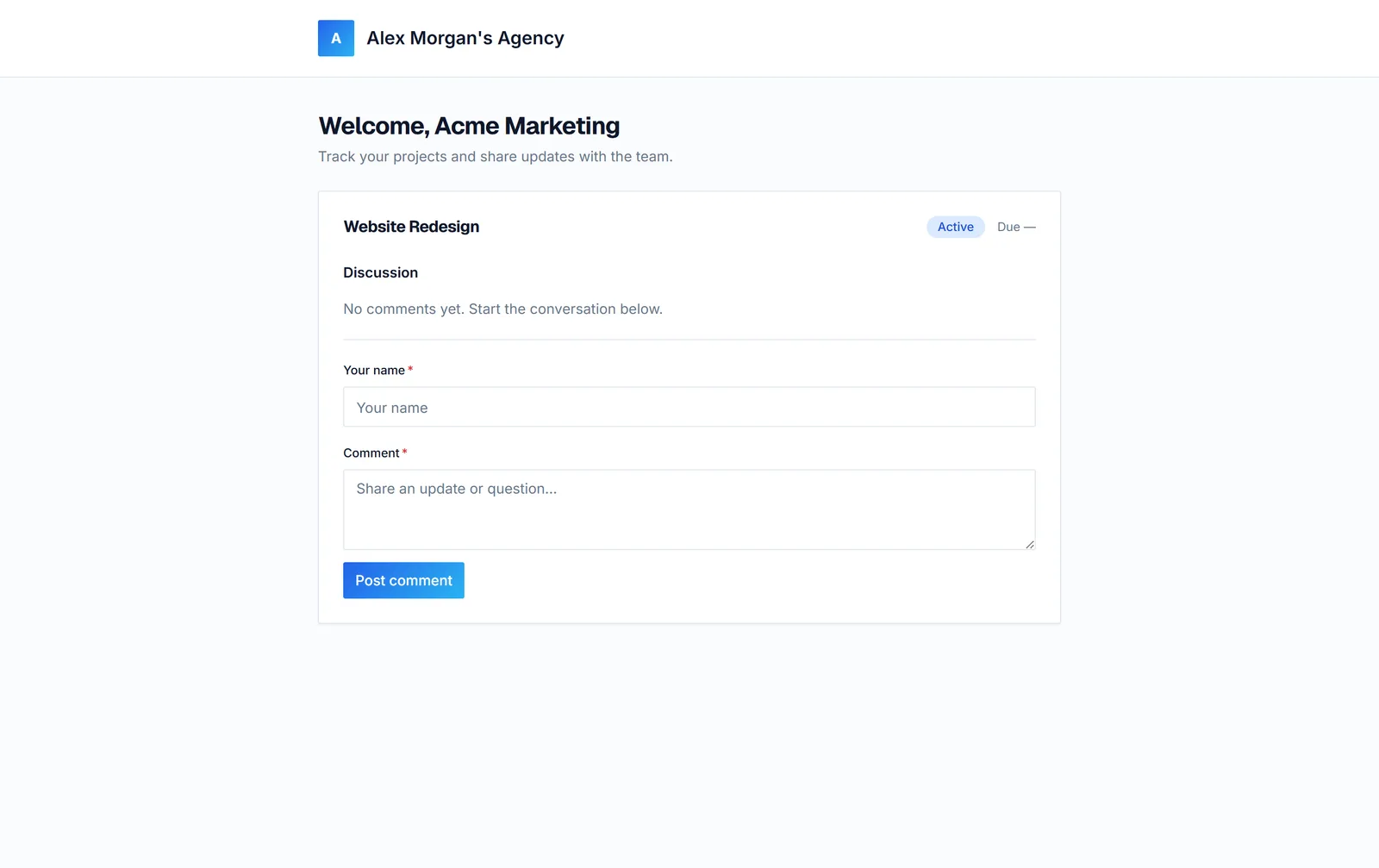
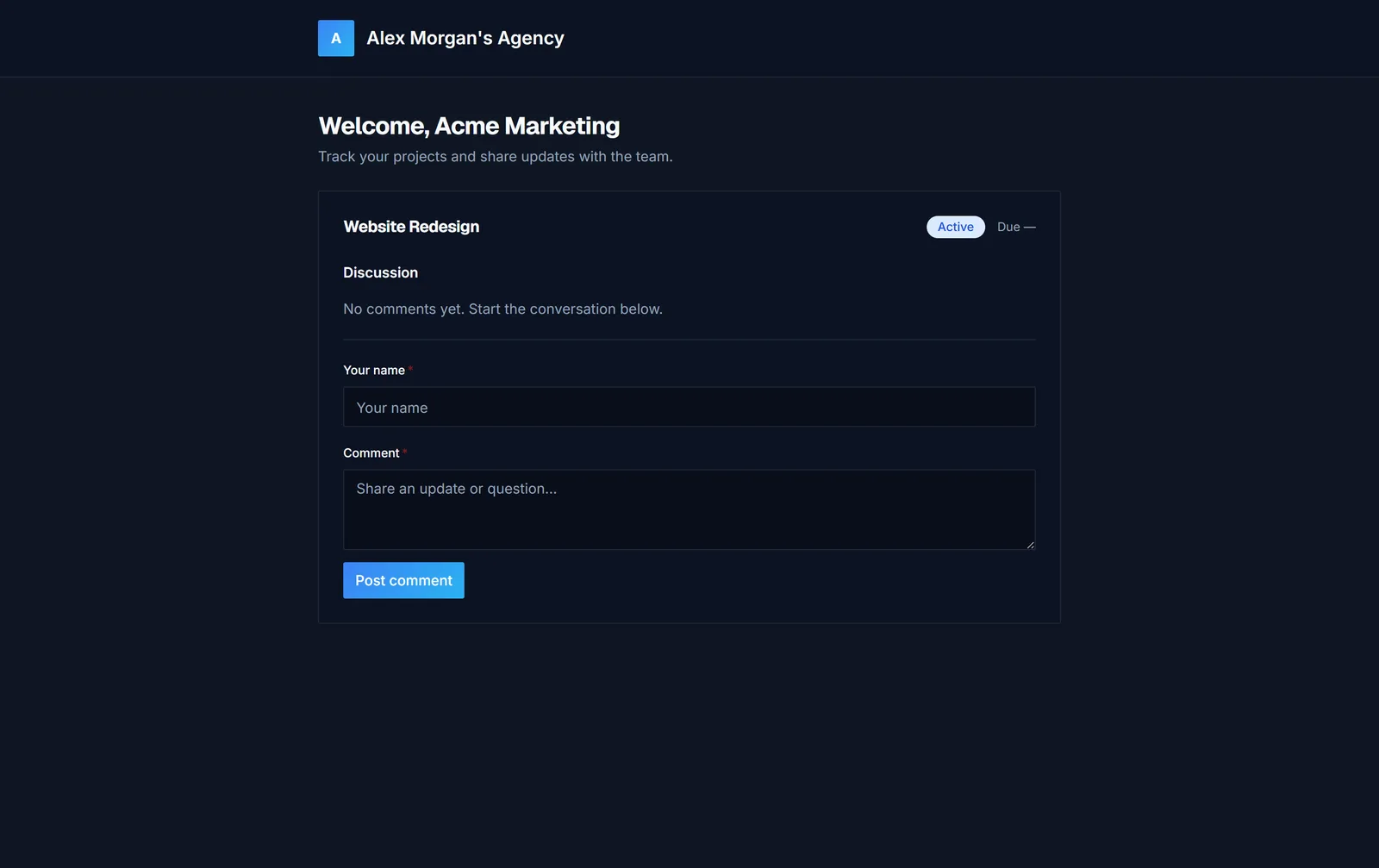
Each client's portal shows their project's current status and history, so any stakeholder can check the level of detail they want without a custom update being written for each of them.
Milestone billing is tracked by memory
Invoices are tied to the client's project record, so milestone billing is issued and tracked against the same engagement rather than reconstructed from a contract every time.
Built for exactly this
Every client, fully organized
Nobody on the team has to ask "does anyone know where that came from?" again.
- Client records
- Notes
- Activity history
- Search
Keep work moving forward
Deadlines stay visible instead of living in someone's memory.
- Status tracking
- Due dates
- Task checklists
A branded space for your clients
Status-update emails go away almost entirely.
- Branded portal
- Comments
- Progress visibility
- Shareable access
Never lose track of a payment
Overdue invoices get chased before they turn into bad debt.
- Paid
- Unpaid
- Overdue
What a week looks like
- 01
Discovery and strategy phase
The engagement is set up as a client project from day one, with strategy notes and early client input logged against it as the foundational phase takes shape.
- 02
Concept presentation
Creative concepts are shared with the client, who leaves feedback directly in their portal — giving every stakeholder a record of what was shown and what they said about it.
- 03
Refinement over multiple checkpoints
As the brand identity is refined across checkpoints, project status is kept current, so a client checking in mid-engagement sees real progress instead of silence.
- 04
Final delivery and milestone invoicing
When the engagement reaches its final delivery milestone, project status reflects completion and the milestone invoice goes out referencing the same client record.
What changes
- Clients stay informed during long engagements without needing a manual status email.
- Strategy and creative feedback build one running record instead of living in scattered files.
- Every stakeholder can check status at their own level of detail, from one portal.
- Milestone invoices are tracked against the engagement, not reconstructed from memory.
Questions from branding agencies
How does Sarion handle milestone-based billing?
Invoices are tied to the client's project, so you can issue and track billing against specific milestones in the engagement rather than relying on a separate reminder to check the contract terms.
Our engagements run for months. How does this keep clients engaged in the meantime?
The client's portal reflects current project status throughout the engagement, so they can check in on real progress between major touchpoints instead of only hearing from you at milestones.
We have several stakeholders on the client side. Can they all see status?
Yes — anyone with access to the client's portal can view the project's status and history, so each stakeholder can check in at the level of detail they want without a bespoke update for each person.
Does Sarion manage our brand strategy documents or creative files?
No — Sarion isn't a document or design file tool. It's where you track the engagement's status, client feedback, and invoicing around the strategy and creative work you produce elsewhere.
How does this help once the engagement moves from strategy into creative execution?
The same client project carries through both phases, so notes and status from the strategy phase stay attached to the same record as the creative work that follows — nothing gets siloed by phase.
Built for Branding Agencies
Start free — no card required. See your first client portal live in minutes.